How to Turn a Favorite Stuffed Animal Into a Story Character
A practical guide to turning your child's favorite stuffed animal or toy into a recognizable character for personalized stories.
A favorite stuffed animal already has most of what a good story character needs. It has a name, a look your child recognizes, and usually a personality that has been developing through play for years.
That history is your starting point. Notice the details that make this particular bear, bunny, dinosaur, doll, or blanket unmistakable, then carry them into the story.
Start with the toy your child actually loves
Choose the stuffed animal that already joins tea parties, car rides, pillow forts, or bedtime. A brand-new toy may look tidier in a photo, but the familiar one gives you more material to work with.
Before writing anything, ask your child a few questions:
- What is the toy's name?
- What is it especially good at?
- What does it find funny?
- Is it bold, cautious, curious, serious, or silly?
- Does it have a favorite snack, phrase, place, or game?
Write down the answers exactly as your child gives them. “Captain Waffles always packs three crackers” is more useful than a polished character biography. Specific details make the character feel like their toy rather than a generic talking animal.
Take a clear photo without overcomplicating it
If you want the story character to be inspired by the real toy, start with a photo that shows what your child recognizes.
Place the toy near a window or another soft light source. Use a simple background, make sure the face is in focus, and include the whole toy when possible. Photograph it from roughly the same height instead of pointing the camera sharply down from above.
Before moving on, check the picture for the details that matter: the floppy ear, striped pajamas, worn patch, button nose, or permanently crooked smile. If one side of the toy looks especially distinctive, take a second photo from that angle too.
You are after a clear reference for the toy your child knows, not a studio portrait.
Here is one of our own toy-to-character examples:
| Original toy | Illustrated Story Mate |
|---|---|
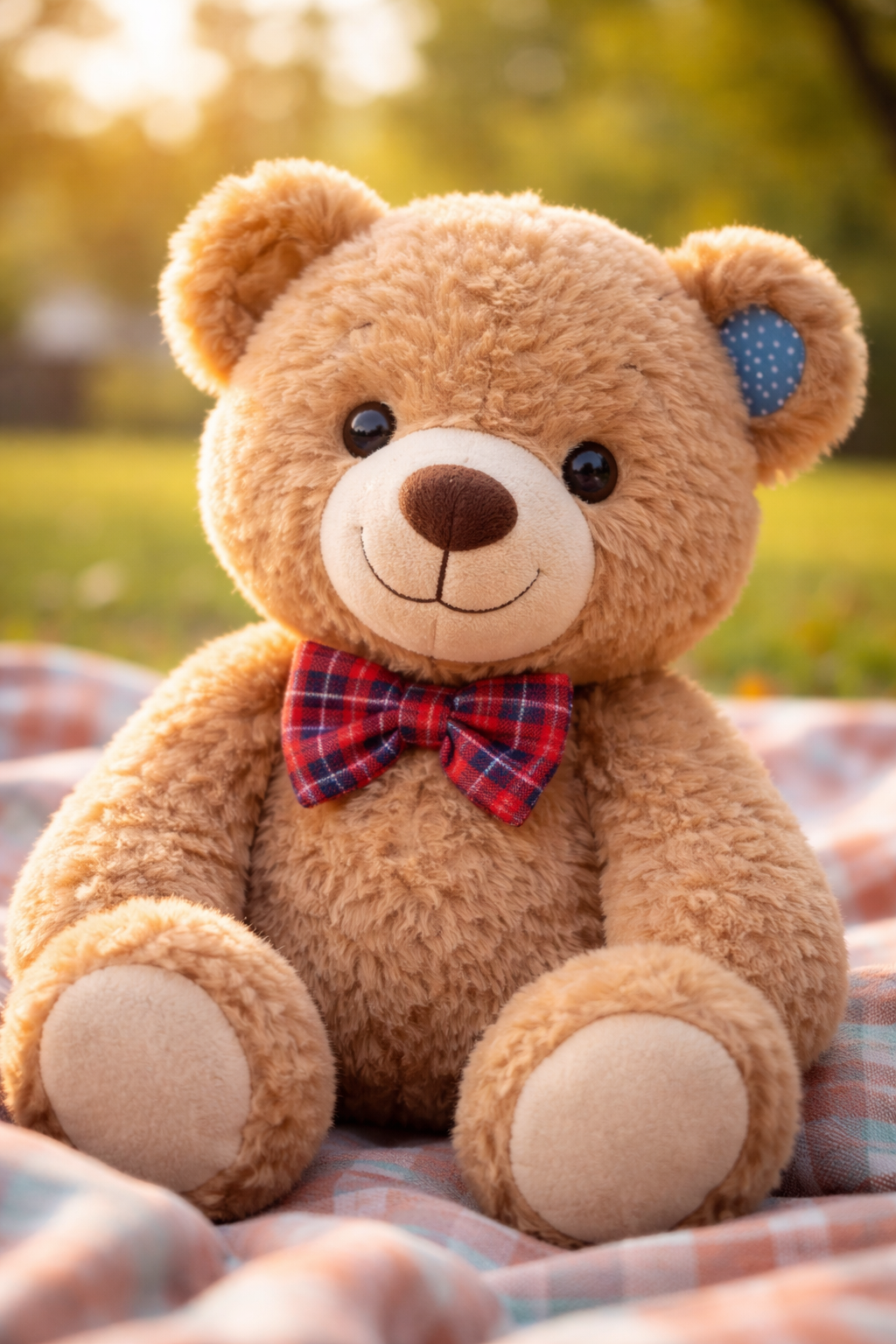 | 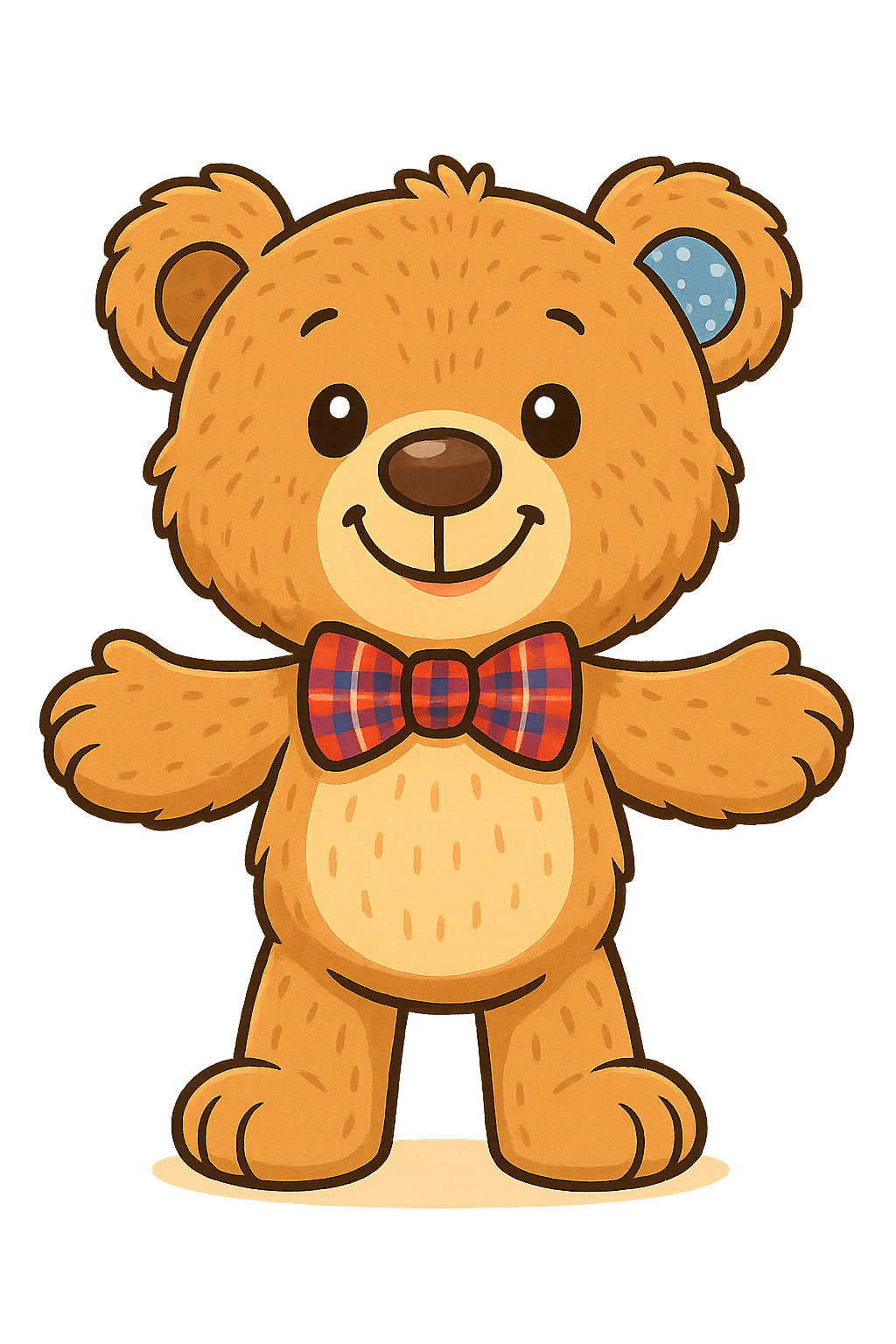 |
Choose three details to carry into the character
Trying to preserve every tiny feature can make the process harder than it needs to be. Pick three anchors instead:
- Its familiar look. Keep the color, clothing, expression, or well-loved feature your child notices first.
- Its personality. Decide how the toy responds when something unexpected happens.
- Its signature detail. Give it one recurring phrase, habit, object, or skill.
For example, a small green dinosaur might become Mossy: an enthusiastic explorer who carries a red backpack and says, “Let's check the map.” That is enough to keep Mossy recognizable across very different adventures.
If you want more help shaping the rest of the cast and setting, see How to Make a Personalized Story for Your Child.
Give the toy one simple problem to solve
Start small. Give the toy one concrete problem to solve and leave room for your child's ideas.
Try one of these starting points:
- The toy needs to find a missing picnic basket before lunch.
- A rainy afternoon changes the plan for an outdoor adventure.
- The toy is visiting the library, aquarium, or grandparents' house for the first time.
- A favorite scarf disappears somewhere inside a pillow fort.
- The toy wants to plan a surprise for another Story Mate.
- A cardboard box becomes a boat, rocket, castle, or train.
You can also borrow a moment from family life. A trip, celebration, new routine, or ordinary Saturday can become more interesting when the stuffed animal gets its own job in the story.
Try these stuffed-animal story ideas
If you would rather begin with a prompt, replace the details in one of these:
The map under the bed
[Toy's name] discovers a hand-drawn map under the bed. The final clue points to something the family thought was lost.
The smallest parade
The toys decide to hold a parade through the living room. [Toy's name] must choose the route, music, and very unusual grand marshal.
The moonlight snack
After everyone goes to sleep, [Toy's name] hears a tiny sound from the kitchen and follows a trail of crumbs.
The pillow-fort weather station
A storm changes the day's plans, so [Toy's name] builds a weather station inside a pillow fort and predicts something surprising.
The first page of the next adventure
[Toy's name] receives a blank book with one sentence already written inside: “Meet me where the blue socks disappear.”
Leave the details open so your child can decide what the map reveals, who joins the parade, or where the socks have gone.
Turn the toy into a reusable Story Mate
MyStoryMates lets you upload a photo of a real stuffed animal or toy and create a Story Mate inspired by it. That character can then star in custom illustrated stories, so you can keep the recognizable hero while changing the setting and plot.
The focused toy experience walks through the photo-to-character flow. Once the Story Mate is ready, choose a plot or start from a suggestion, then add the name and personality details you collected earlier.
For bedtime-specific prompts, you can also browse these bedtime story ideas for parents.
Read the first story together and save the sequel ideas
When you read the story, leave room for commentary. Your child may immediately point out what the toy would really say, choose a different ending, or announce where the next adventure should happen.
Keep a short sequel list with those ideas. The same character might visit the moon one night, search for a missing mitten the next, and host a birthday picnic over the weekend. The toy stays familiar; the story can keep changing.
Ready to put their favorite toy in the story?
Turn a stuffed animal or toy into a Story Mate, then create its first illustrated adventure together.
Ready to make a story they’ll remember?
Try MyStoryMates and create personalized stories starring the people, pets, and toys your child already loves.